


Updated October 2026
The short answer: If your AC is running but not cooling, check the thermostat, the air filter, the breaker, the outdoor unit and the indoor coil for ice, in that order. A dirty filter, a tripped breaker or a blocked outdoor unit fixes many cases in minutes. If the air is still warm after those checks, turn the system off and call a pro before a small problem damages the compressor.
Key takeaways
- Most "AC not cooling" calls trace back to airflow, power or a failed part like a capacitor, not a dead system.
- Never open the outdoor unit's electrical panel or handle refrigerant yourself.
- Ice on the coil or copper lines means turn the system off and let it thaw.
- When it is 105 degrees outside, an AC that holds your home at 78 may be working fine.
- If the repair quote multiplied by the system's age is over $5,000, replacing usually makes more sense.
9 things to check when your AC is not cooling
1. Check the thermostat
Make sure it is set to Cool, the fan is on Auto, and the set temperature is below the current room temperature. If the display is blank or dim, replace the batteries. A smart thermostat that lost Wi-Fi can also revert to a schedule you did not intend.
2. Check the air filter
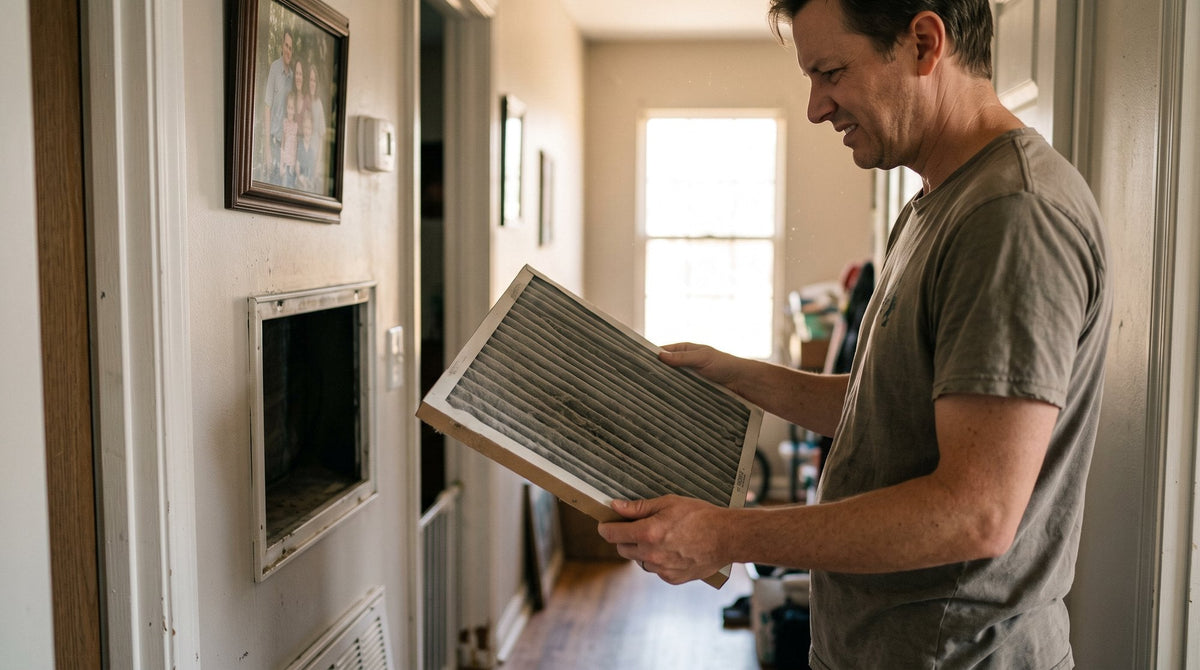
A clogged filter chokes airflow. The system keeps running, but the air that reaches your rooms is weak and warm, and the indoor coil can freeze. Pull the filter. If you cannot see light through it, replace it. In Sacramento's dusty, pollen-heavy summers, check filters every one to three months.

3. Check the breaker and the outdoor disconnect
Your AC usually has a double breaker in the main panel and a disconnect box near the outdoor unit. If the breaker tripped, reset it once. If it trips again, stop. A repeat trip points to a failing motor, compressor or wiring problem, and resetting it again can make it worse.
4. Look at the outdoor unit
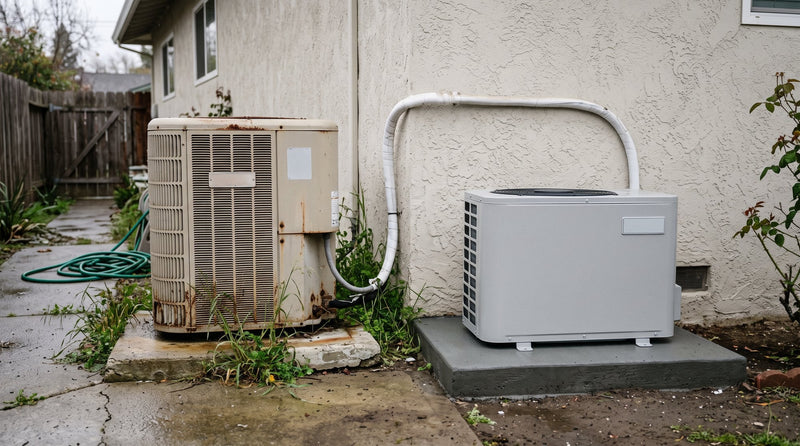
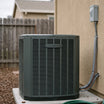
Is the fan spinning? Is the unit humming without the fan turning? Clear leaves, cottonwood fluff, grass clippings and stored items so there are about two feet of clearance on every side. If the outside of the coil looks caked with dirt, turn the power off at the disconnect and rinse it gently with a garden hose, then let it dry before restoring power. Leave any deeper coil cleaning to a pro. A humming unit with a stopped fan often means a failed capacitor or motor. Do not push the fan blades to start them.
5. Look for ice
Ice on the copper line at the outdoor unit or on the indoor coil means the coil has frozen, usually from restricted airflow or low refrigerant. Turn the system off at the thermostat, leave the fan on if you can to speed thawing, and wait several hours. If it freezes again, you likely have a refrigerant leak or an airflow problem that needs a technician.

6. Check the condensate drain and float switch
Your AC removes gallons of water from the air on a hot day. If the drain line clogs, a safety float switch can shut the system off to prevent a leak. Look for water in the drain pan under the indoor unit or a wet spot on the ceiling. If you see standing water, call. A clogged drain is a common, inexpensive fix, but water damage is not.
7. Open the vents and check the return
Closed or blocked supply registers and furniture blocking a return grille reduce airflow. Make sure registers are open and nothing covers the return.
8. Ask whether it is just too hot
Most air conditioners are designed to cool a home roughly 15 to 20 degrees below the outdoor temperature. When Sacramento hits 108, an indoor temperature of 78 to 80 can be normal. If your system ran all afternoon and held steady, it may be keeping up. If it is falling behind on a 95-degree day, something is wrong.
9. Listen and smell
Grinding or squealing means a bearing or motor problem. A musty smell suggests moisture in the coil or drain. A burning smell means shut the system off right away and call.
When to stop and call a pro
Call a technician if any of the following is true:
- You have checked the first five items and the air is still warm.
- The breaker trips again after one reset.
- The coil or lines ice up a second time.
- You see water near the indoor unit or hear gurgling from the drain.
- You smell burning or hear grinding.
- The system is humming but the outdoor fan is not moving.
Do not open electrical panels or handle refrigerant. Both require training and, in the case of refrigerant, certification.
What does AC repair cost in Sacramento?
These are typical ranges for the Sacramento region, not quotes. Your price depends on the part, the system and how hard it is to reach.
| Repair | Typical range | What it usually means |
|---|---|---|
| Capacitor or contactor | $150 to $500 | A small part and a straightforward repair |
| Fan or blower motor | $400 to $1,200 | Repair makes sense on a newer system |
| Refrigerant leak repair and recharge | $300 to $1,800 | The leak location and system age decide it |
| Evaporator or condenser coil | $1,500 to $3,500 | Compare against replacement on older systems |
| Compressor | $2,000 to $4,500 | Often the point where replacement wins |
A simple rule helps: multiply the repair quote by the system's age in years. If the result is over $5,000, replacing usually makes more sense. A $500 repair on a 6-year-old system is $3,000, so repair. A $900 repair on a 14-year-old system is $12,600, so it is time to talk replacement. Systems that still use R-22 refrigerant, which is no longer produced in the U.S., get more expensive to recharge every year.
How to stay safe during a Sacramento heat wave
- Close blinds and curtains on sun-facing windows and run fans to move air.
- Stay hydrated and avoid hard activity in the hottest part of the afternoon.
- Check on older neighbors, young children and pets. If indoor temperatures climb into the 90s, move to a cooler place such as a library, a shopping center or a local cooling center.
- Do not run a struggling AC for hours hoping it recovers. If it is icing or tripping the breaker, turn it off.
How to avoid a breakdown next summer
- Change the filter every one to three months during cooling season.
- Keep two feet of clearance around the outdoor unit.
- Schedule a tune-up in spring, before the first 100-degree week, when it is easier to book.
- Do not ignore small signs like a new noise or a longer run time.
Frequently asked questions
Why is my AC running but the house is not getting cooler?
The most common causes are a dirty filter or coil, low refrigerant from a leak, a failed capacitor, a frozen evaporator coil or leaky ducts. Check the filter and thermostat first, then call a technician if the air is still warm.
Why is my AC blowing warm air?
Warm air usually means the outdoor unit is not running, the refrigerant is low, or the evaporator coil is frozen or dirty. If the outdoor fan is not spinning, turn the system off and call.
Is it OK to run my AC if the coil is frozen?
No. Running a frozen system can damage the compressor and cause water leaks. Turn it off and let the ice melt before calling.
How long should an air conditioner last in Sacramento?
Most central air conditioners last 12 to 15 years. Long, hot summers mean more run time, so maintenance matters.
What is the best time to get an AC tune-up?
Spring, before the first stretch of triple-digit weather. Repair calls spike during heat waves, so booking earlier is easier.
Still warm? Call Senga
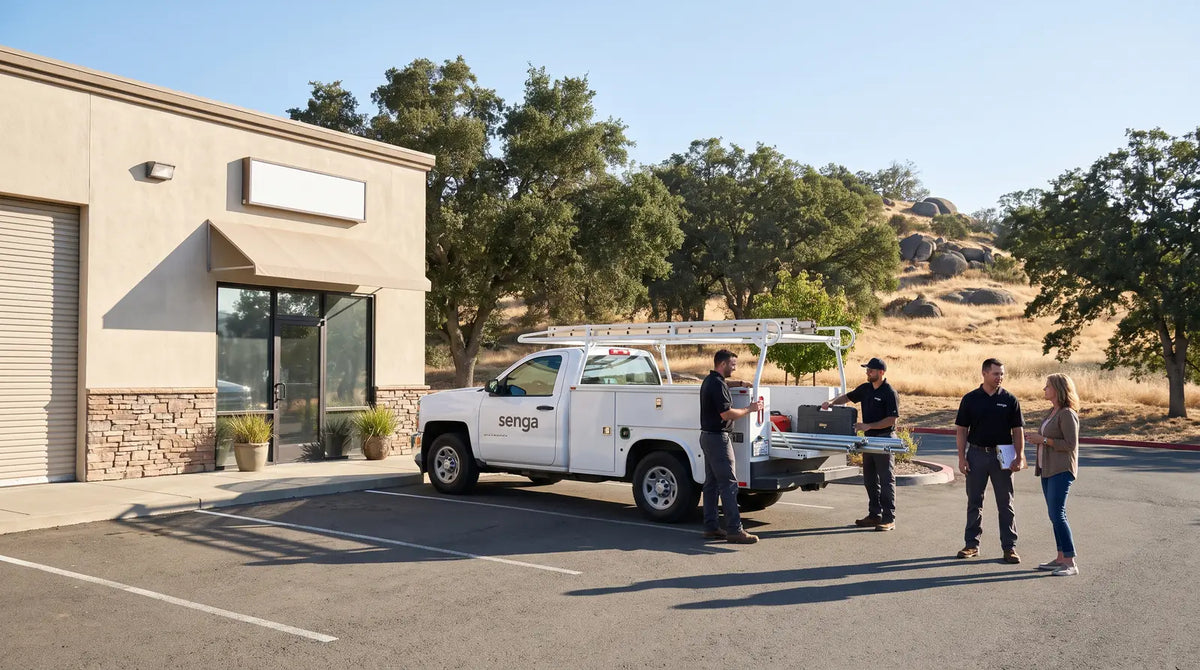
You do not need to diagnose it first. Call Senga at (916) 545-9053, tell us what your air conditioner is doing, and we will help you find the fix or tell you honestly when it is time to replace the system. We serve El Dorado Hills, Folsom, Roseville, Sacramento and communities within about 50 miles. See how Senga handles HVAC repair and replacement, or learn about the $0-down Comfort Plan for eligible homeowners.