


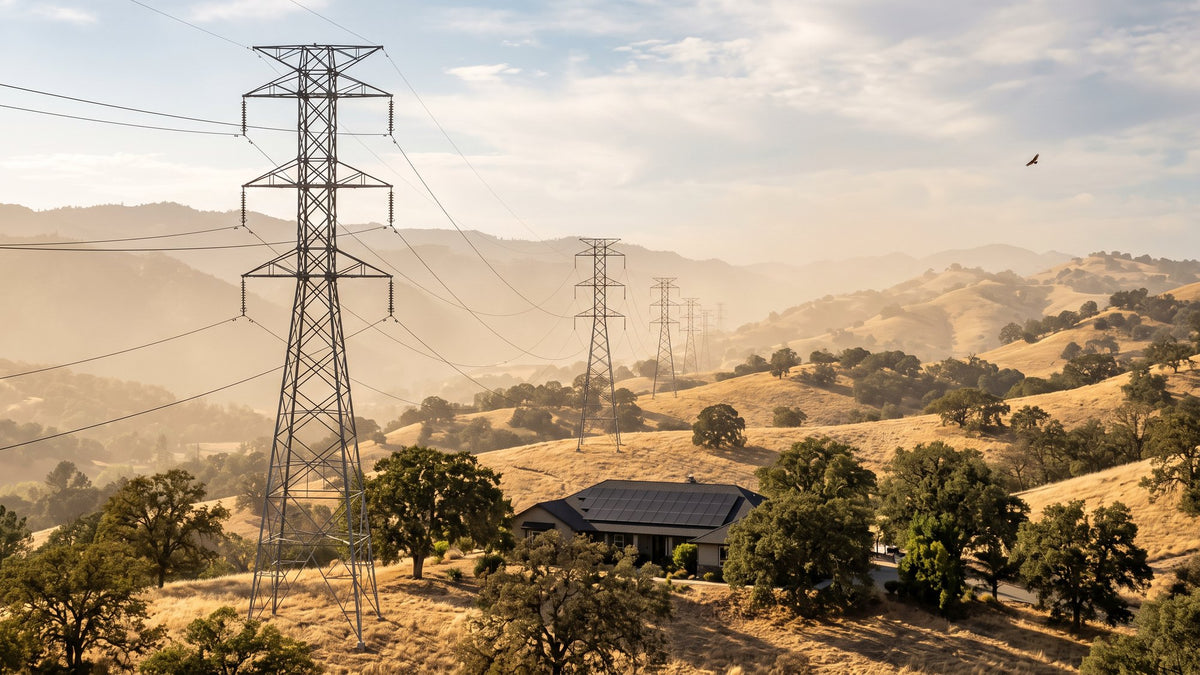
President Trump’s August 26 executive order warns that vulnerabilities in America’s electrical infrastructure could threaten the economy, public safety and national security. For PG&E customers, the announcement raises a more personal question: How dependent do you want your home to be on the grid?
August 28, 2026 | Senga Energy News
On August 26, 2026, President Donald Trump signed an executive order declaring a national emergency involving the security of the United States bulk-power system, citing growing threats from foreign actors, vulnerable electrical equipment and an increasingly strained dependence on reliable electricity.
The announcement is significant, but it is also important to understand exactly what it does and does not say.
The executive order is not a directive telling Americans to install rooftop solar or home batteries. It primarily addresses the security of the nation's large-scale transmission and generation infrastructure and seeks to restrict foreign-produced equipment that could pose unacceptable security risks.
But the reasoning behind the order carries an unmistakable message for anyone who depends on the electrical grid:
Reliable electricity can no longer be taken for granted.
And for millions of California homeowners, particularly those living in PG&E territory, that conversation is already hitting close to home.

The White House: Threats to the Power System Have Become an “Unusual and Extraordinary” National Emergency
The executive order focuses on America's bulk-power system, the large-scale infrastructure responsible for generating and transmitting electricity across the country.
The White House says foreign actors are increasingly capable of exploiting vulnerabilities in that infrastructure.
In the order, President Trump warns that certain equipment could contain vulnerabilities capable of enabling:
“sabotage, subversion, unauthorized access, malicious remote action, or supply disruption.”
The administration says the potential consequences extend far beyond an inconvenient power outage.
A successful attack or disruption could have “catastrophic effects” on American critical infrastructure or the economy, according to the order.
The White House also pointed to something else that has changed dramatically in recent years: America's appetite for electricity.
The order states that rapid expansion of artificial intelligence, data centers, advanced manufacturing and defense production has increased the country's dependence on abundant and reliable power, and increased the consequences if that power becomes unavailable.
The administration ultimately concluded that the threat posed by potentially vulnerable foreign-supplied bulk-power equipment constitutes an:
“unusual and extraordinary threat”
to the national security, foreign policy and economy of the United States.
That's unusually strong language for something most Americans rarely think about until their lights go out.

What Does the Executive Order Actually Do?
The order gives the Secretary of Energy broad authority to identify and restrict certain foreign-produced equipment when it presents unacceptable risks to America's power infrastructure.
That can include equipment or associated software capable of unauthorized remote access, supply-chain disruption or malicious manipulation.
The government can also impose conditions on certain equipment already operating in the United States and, in some circumstances, require vulnerable equipment to be isolated, disconnected, replaced or removed. The Department of Energy is directed to develop implementing rules and identify equipment presenting elevated risks.
There's an important distinction for homeowners:
The executive order specifically excludes facilities used for local electricity distribution. It is about the nation's bulk-power system, not an order regulating the solar panels or battery sitting beside someone's house.
So why should a California homeowner care?
Because although Washington is confronting one category of grid vulnerability, Californians already live with another: the practical consequences of being dependent on a centralized electrical system.

For PG&E Customers, Grid Reliability Isn't a Hypothetical Issue
A cyberattack on America's electrical infrastructure represents an extreme scenario.
A PG&E outage doesn't.
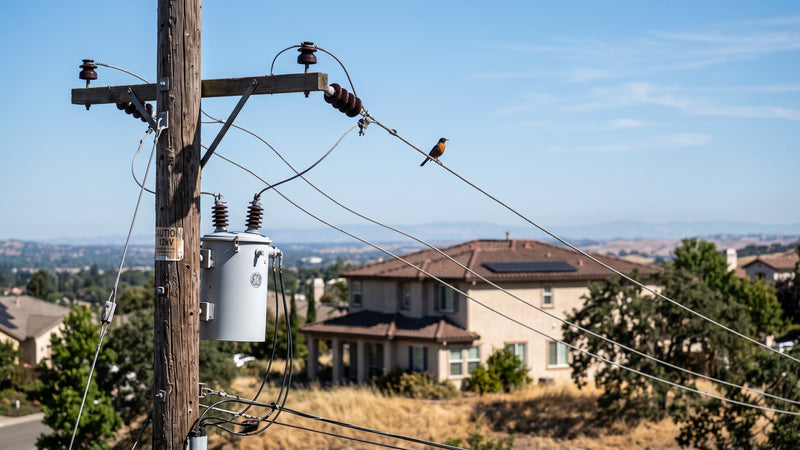
California residents already contend with wildfire conditions, storms, damaged equipment and intentional power shutoffs.
PG&E's Public Safety Power Shutoff (PSPS) program allows the utility to temporarily turn electricity off when severe weather and wildfire conditions make energized electrical equipment dangerous.
PG&E says customers in California's Tier 2 and Tier 3 wildfire-risk areas are more likely to experience these shutoffs. The utility's own records show PSPS events occurring multiple times already in 2026.
That makes the national conversation about grid resilience particularly relevant in Northern California.
The causes may be completely different, but the vulnerability is the same:
If the grid stops supplying your house, what happens next?
For a conventional home, the answer is simple.
The power goes out.
For a properly designed solar-and-battery home, the answer can be very different.

Solar Alone Isn't the Same as Energy Security
This is an important distinction that sometimes gets lost in conversations about solar.
Having solar panels on your roof does not necessarily mean your home will have electricity during a grid outage.
Most conventional grid-tied solar systems shut down when the grid fails. That's an important safety feature designed, among other things, to prevent a home from sending electricity onto utility lines while crews may be working on them.
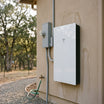
A properly configured solar + battery backup system, however, can safely disconnect the home from the grid and use stored electricity to power designated loads.
PG&E itself explains that during an outage, a properly configured home battery can automatically activate after the home disconnects from the grid and continue supplying backed-up circuits. Depending on system design, that could include essentials such as refrigeration, lights, Wi-Fi and medical equipment.
And pairing the battery with solar introduces another important capability.
During an extended outage, solar may be able to recharge the battery during daylight hours, depending on the system configuration, available sunlight, battery state and household consumption.
PG&E specifically notes that backup duration depends on battery size, electricity usage and whether the homeowner has solar.
That's where solar stops being simply an electricity-bill decision.
It can become part of a home's resilience strategy.

Imagine Two Homes During a 48-Hour Outage
Consider two hypothetical PG&E customers living on the same Northern California street.
At 4:30 p.m., utility power disappears.
Home A: Traditional Grid-Dependent Home
The refrigerator stops cooling.
Internet equipment shuts off.
As evening arrives, the house is dark.
Phones can be charged from a vehicle or portable battery for a while, but everything ultimately depends on stored power.
If the outage continues into the next day, the homeowner has no independent source capable of producing electricity for the house.
Home B: Solar + Battery Backup
The grid fails, but the home's backup system detects the outage and isolates the backed-up portion of the house.
The battery takes over.
The family deliberately reduces consumption, avoiding unnecessary high-power appliances while keeping selected essentials operating.
The next morning, assuming sufficient sunlight and a system designed for solar charging during outages, the panels begin producing electricity again and can help recharge the battery.
The family still has to manage its energy carefully. A residential battery is not an unlimited power plant, and running large loads can drain it quickly.
But Home B possesses something Home A doesn't:
A source of electricity located at the property itself, combined with a way to store that energy for later.
That's a meaningful difference.

Now Consider the Scenario Washington Is Worried About
The White House executive order raises a much less likely, but potentially much more serious, possibility.
Imagine a sophisticated foreign adversary successfully compromises critical electrical infrastructure.
The August 26 order specifically identifies risks including unauthorized access, malicious remote action, sabotage and supply disruption. The administration's concern is serious enough that it has authorized federal action to prevent certain vulnerable equipment from entering or remaining in critical parts of America's bulk-power system.
This does not mean officials are predicting an imminent nationwide blackout.
They're not.
But hypothetically, if a major grid disruption occurred, the consequences could extend well beyond losing air conditioning for an afternoon.
Communications, businesses, transportation systems, food storage, medical services and other infrastructure all ultimately depend on electricity.
Residential solar and batteries obviously cannot protect the national grid from a cyberattack.
What they can potentially do is make an individual household less dependent on continuous grid power for certain essential electrical needs.
Think of it as the difference between preventing a storm and owning an umbrella.
You can't control what happens to the larger system.
You can control how prepared your home is when something happens to it.

PG&E Already Encourages Customers to Consider Battery Backup
Perhaps the strongest argument for separating preparedness from politics is that PG&E itself promotes residential battery storage as an outage-preparedness option.
PG&E says customers commonly choose batteries to:
-Keep essential power operating during outages
-Prepare for wildfire season and storms
-Use more of their solar electricity at home
-Reduce grid consumption during higher-priced hours.
PG&E also maintains several backup-power programs and incentives, including battery rebates, the Self-Generation Incentive Program and programs targeted toward customers facing elevated outage risks.
In fact, PG&E's Residential Storage Initiative says it has provided 3,800 customers with batteries since 2022, specifically targeting customers more likely to experience PSPS and Enhanced Powerline Safety Settings outages. PG&E says those installed systems are valued at more than $15,000 including installation, although eligibility is limited and availability is first-come, first-served.
In other words, the concept isn't theoretical:
PG&E itself recognizes permanent battery storage as one way certain customers can prepare for outages.

The Financial Side: Produce Electricity When It's Available. Store It Until You Need It.
Resilience is only one part of the equation.
For many PG&E customers, solar + storage can also change when and how they purchase electricity from the utility.
Solar produces electricity during daylight hours.
A battery can capture some available energy for later use rather than forcing the household to consume all of its solar production as it is generated.
That becomes particularly useful under time-of-use electricity pricing, where the value and cost of electricity can change depending on the hour.
PG&E explicitly says batteries can be configured to store electricity when it is less expensive and use that stored energy when grid electricity costs more.
Solar economics are highly property-specific. Roof exposure, electricity consumption, equipment, financing, rate plan and system size all matter, so homeowners should evaluate actual projected savings rather than assume solar automatically eliminates an electric bill.
But the basic proposition has evolved.
The old solar question was:
“Can panels lower my electric bill?”
The modern solar + battery question is increasingly:
“How much of my home's electricity can I produce, store and control myself?”

The Bigger Message Behind the National Emergency
President Trump's executive order isn't telling Americans to buy solar panels.
It's doing something much larger: acknowledging at the highest level of the federal government that the infrastructure delivering America's electricity is strategically important, and that vulnerabilities within that system deserve serious attention.
The federal government is responding at the national level by securing equipment, scrutinizing supply chains and attempting to reduce the possibility that foreign adversaries could compromise critical infrastructure.
A homeowner obviously can't do that.
But homeowners can address resilience at the household level.
For PG&E customers, particularly those living in areas susceptible to outages and wildfire-related shutoffs, solar paired with properly designed battery backup offers a way to reduce, but not eliminate, the consequences of losing grid power.
It won't make your home invulnerable.
It won't provide unlimited electricity.
And it won't protect America's electrical grid.
What it can provide is another layer between your family and whatever happens outside your meter.
In 2026, that may be one of the most compelling reasons yet to take another look at solar.

Is Your Home a Good Candidate for Solar + Battery Backup?
Not every property needs the same system, and not every homeowner will qualify for the same incentive programs.
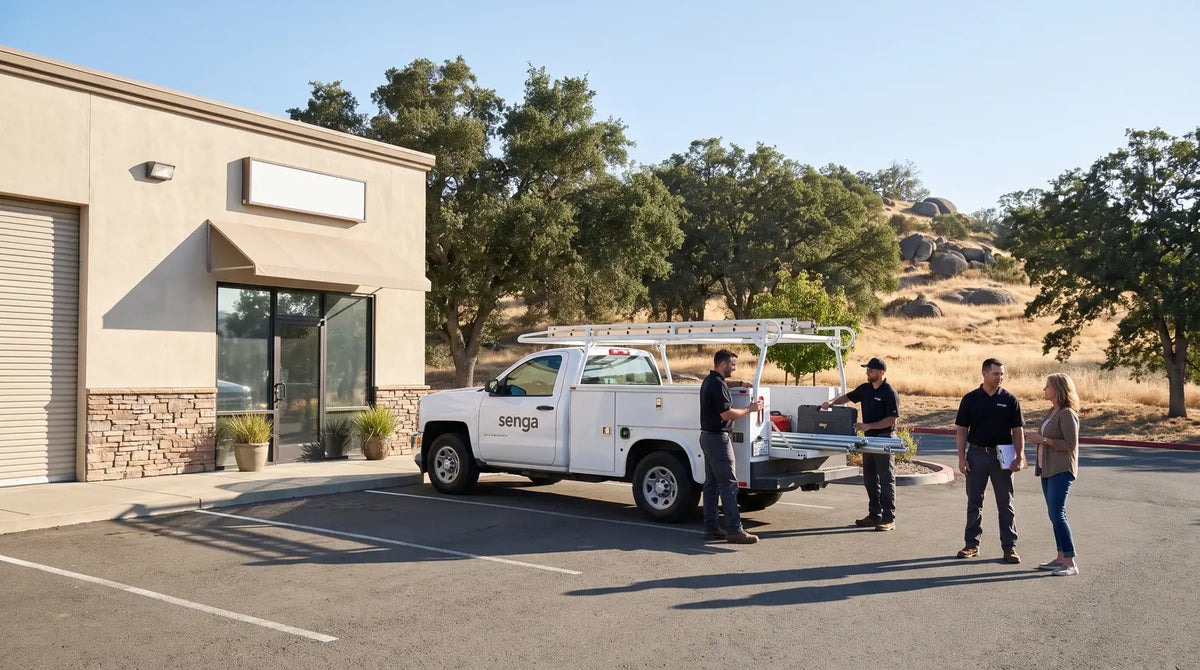
Senga Energy helps PG&E homeowners evaluate their electricity usage, solar potential, backup-power needs and currently available battery programs to determine whether solar + storage makes financial and practical sense for their home.
See what your home qualifies for and get a personalized solar + battery assessment from Senga Energy.
This article is for informational purposes. The August 26 executive order does not recommend or require residential solar or battery installations, and Senga Energy is not affiliated with the White House, the federal government or PG&E. Backup capabilities vary by system design, equipment, electrical loads, weather and other conditions.
Primary source: Read the August 26, 2026 Executive Order at the White House