


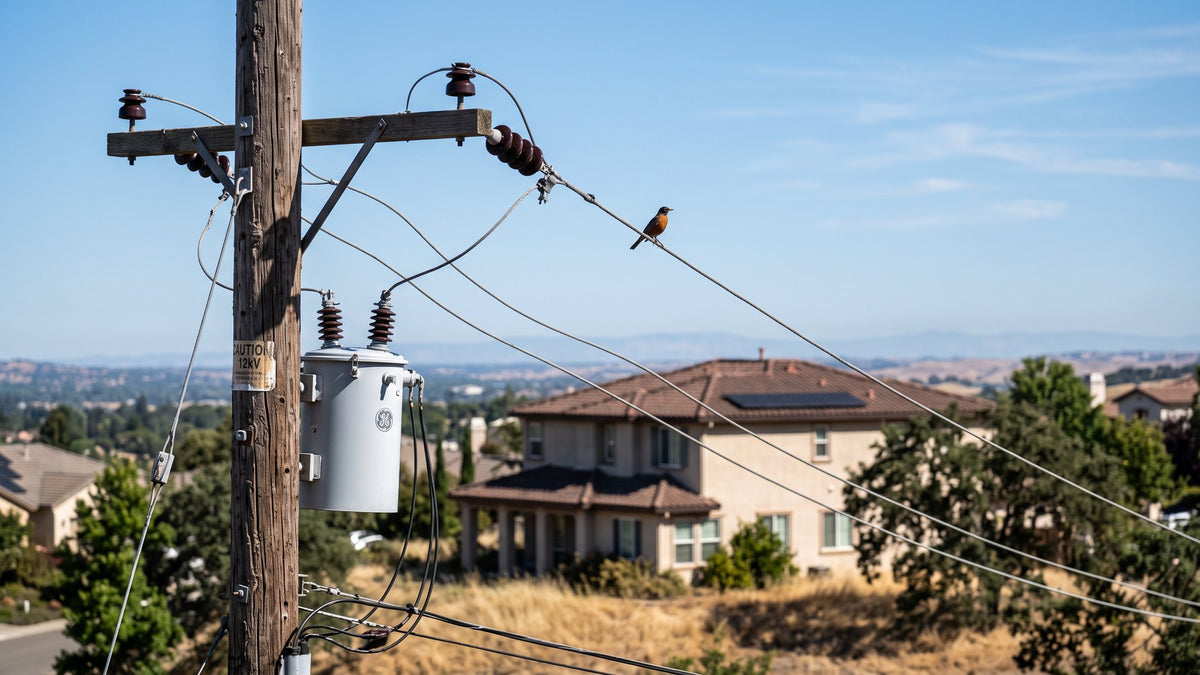
People in El Dorado Hills don’t complain about electricity because they’re careless with usage.
They complain because even disciplined households feel punished.
Lights off. Thermostat dialed back. EV charging at night. Still brutal bills.
That’s not an accident... it’s structural.
Here’s what’s actually going on in PG&E territory, without the spin.
El Dorado Hills Isn’t Paying for Power - It’s Paying for the Grid
When most homeowners look at their bill, they assume they’re paying for electricity.
They’re not.
They’re paying for:
-Long-distance transmission lines
-Fire-hardening projects
-Vegetation management
-Emergency shutoff systems
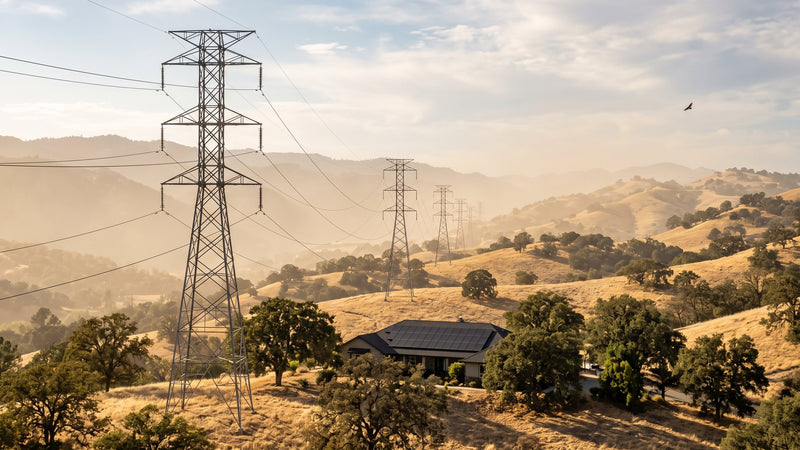
-Aging infrastructure spread across mountains and wildland
In PG&E territory, delivery and risk management dominate the bill. The electricity itself is almost secondary.
That’s why cutting usage doesn’t feel like it helps anymore.
Fire Risk Changed the Math, Permanently
El Dorado Hills sits in a high-risk fire corridor. That single fact reshaped how PG&E operates — and how homeowners pay.
Instead of pricing power like a commodity, the utility now prices it like insurance:
-Harden the grid
-Prevent lawsuits
-Reduce wildfire exposure
-Recover costs through rates
Whether you personally benefit or not, you’re funding the system.
This is why power here feels more expensive than nearby cities — even when the homes look the same.
Why Nearby Cities Feel Cheaper (Even If They’re Not Using Less Power)
Drive 30–45 minutes in almost any direction and you’ll hear a familiar line:
“Our bills aren’t that bad.”
That’s usually not because those homeowners are more efficient.
It’s because they’re served by different utility structures.
Municipal utilities and community choice programs can:
Separate generation from delivery
Spread costs differently
Avoid some wildfire liability exposure
El Dorado Hills doesn’t get that flexibility.
Same state. Same sun. Different rules.
The Real Problem: You Can’t Plan Around PG&E Anymore
The most frustrating part for homeowners isn’t even the bill.
It’s the unpredictability.
Rates change multiple times a year
New fees appear, then disappear
Peak pricing keeps shifting
Usage reduction no longer equals savings
You can’t budget around that.
You can’t optimize around that.
And you definitely can’t out-discipline it.
Why Solar Is No Longer About “Saving Money”
This is where the conversation usually goes sideways.
Solar used to be sold as a discount.
That framing is outdated.
In PG&E territory - especially in El Dorado Hills - solar has become something else entirely:
Control.
Control over where your power comes from
Control over when you use it
Control over how exposed you are to rate changes
Solar (especially paired with storage) isn’t about beating PG&E at their own game.
It’s about playing a different game entirely.
What Actually Fixes the Problem
Not wishful thinking.
Not waiting for reform.
Not hoping rates come down.
What works is simple in concept:
-Produce more of your own power
-Rely less on the grid during expensive hours
-Treat PG&E as backup - not the source
When homeowners do that, something changes:
-Bills stabilize
-Planning becomes possible again
-Rate hikes lose their bite
That’s the real shift happening quietly across El Dorado Hills.