


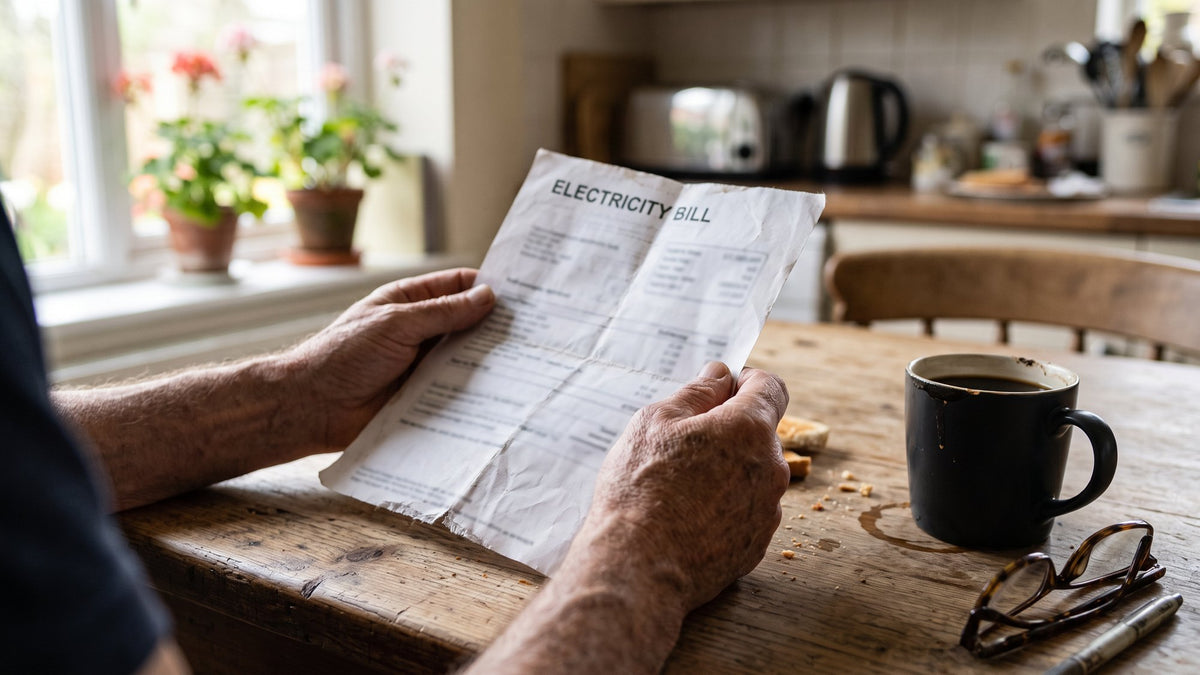
Here is a conversation we have almost every week, usually at somebody's kitchen table somewhere between Cameron Park and Grass Valley.
A homeowner slides a PG&E bill across the table. Then they ask the question underneath the question: is this going to keep getting worse, or am I about to make a 20 year decision based on a bad year?
It is a fair question, and in the last few months it stopped being a matter of opinion. It is now a public argument between the state and the utility, with real numbers on both sides. So let us lay out both, then talk about what it means if you are weighing solar and storage right now.
What the state watchdog said
In March 2026, the Public Advocates Office, the independent ratepayer advocate housed inside the California Public Utilities Commission, published a fact sheet adding up every rate request PG&E currently has in front of regulators.
Their conclusion: if those requests are approved as filed, the average PG&E bill could rise about 16 percent by 2027, roughly $37 a month, and about 30 percent by 2030, roughly $70 a month. Annualized, that is around $840 a year on top of what a household pays now.
The San Francisco Chronicle covered it under a headline that captured the situation neatly: bills could cost $840 a year more by 2030, the watchdog says, and the utility disagrees.
The arithmetic behind it is not mysterious. The office projects PG&E's total revenue requests climbing from about $15.4 billion in 2026 to about $22.2 billion in 2030, a 44 percent increase. The costs behind it include wildfire recovery tied to the Dixie and Kincade fires, Diablo Canyon, undergrounding, billing system upgrades, and roughly a billion dollars sitting in memorandum accounts waiting to be recovered.
The office's sharper point is about framing. It argues PG&E's messaging describes only part of the expected cost trajectory, because much of the money is requested outside the General Rate Case PG&E talks about publicly.
What PG&E says back
PG&E's position is not that costs are flat. It is that its own request is modest, and that bills are a different animal than rates.
In its 2027 General Rate Case, PG&E is asking for about 3.5 percent a year from 2027 through 2030, which it calls its smallest increase in a decade and which works out to roughly $126 a year. PG&E also says that certain add-on charges baked into today's rates are scheduled to expire in 2026, and that once they roll off, a typical residential bill in 2027 would land flat compared to 2025.
PG&E has been consistent about this. On its July 2025 earnings call, CEO Patti Poppe told analysts the company had stabilized bills and expected them to be down in 2026, crediting about $2.5 billion in savings from new technology and process changes.
Consumer groups are not convinced. The Utility Reform Network notes that more than a dozen separate increases are pending outside the General Rate Case, and makes the same argument: a household does not experience a rate, it experiences a bill.
So who is right?
We install solar and batteries. We are not going to pretend we can referee a rate case.
What we can say is that both sides can be technically right at once, which is exactly what makes this hard for a homeowner. PG&E's rate case really is a smaller ask than its recent ones. And every pending request added together really could land somewhere much higher than that one filing suggests. Which of those futures shows up depends on what regulators approve over the next four years, and nobody, us included, knows that yet.
Why this matters if you are thinking about solar
Most solar proposals contain a number buried in the fine print called the utility escalation rate. It is the assumption about how fast your power price will rise over the next 25 years, and it does more work in that savings projection than the panels do.
Change that assumption from 3 percent to 6 percent and the same system looks like a dramatically better or worse investment. Salespeople know this. Some of them lean on it.
Going solar is not really a bet that rates will spike. It is the decision to stop being fully exposed to whichever way this argument resolves. If PG&E is right and bills stay flat, a well designed system still saves you money, just less dramatically than an aggressive proposal claimed. If the Public Advocates Office is closer to right, you locked in a fixed cost for your power in the year before it mattered most.
That is a hedge, not a lottery ticket. It is a perfectly good reason to do something. It is just a different reason than the one most solar ads give you, and it leads to a different system.
Specifically, it means you should be suspicious of any proposal whose savings math depends on rates climbing fast. Ask what escalation rate was used. If it is above 5 percent, ask why. A quote that only works if the worst case happens is not a quote, it is a wager.
The other thing that changed out here
There is a second variable that gets almost no airtime in the rate debate, and out here it may matter more than the first one.
PG&E runs Enhanced Powerline Safety Settings on high fire risk circuits, which means the line trips off for things it used to shrug off. A branch touches a conductor and the power goes out. It is good fire policy. It is rough on a house.
If you live in El Dorado Hills, Placerville, Pollock Pines, Georgetown, Cool, Auburn, Foresthill or Grass Valley, you already know this. You have probably lost power more times in the last two years than you can count on one hand.
That changes the calculus, because storage does two separate jobs at once out here. It keeps the refrigerator running during an outage, and it lets you use your own cheap daytime power during the expensive evening hours instead of exporting it to PG&E for a fraction of what you would pay to buy it back. Under the current Solar Billing Plan, that second job is where most of the savings now live.
The part almost nobody knows about
Here is where the two threads meet, and it is the reason we wrote this.
PG&E currently offers a flat $7,500 rebate toward a permanently installed home battery, and the central requirement is having experienced five or more wildfire safety outages since January 1, 2024. The program terms are on PG&E's own site. It is not a percentage, and it is not a tax credit you claim later. It is $7,500.
There are conditions. You have to be a first time battery customer with PG&E, install equipment from their qualified product list, get Permission to Operate, and enroll in a time of use rate plan and an approved demand response program. Households that already used SGIP or PG&E's other battery programs are excluded, so for many people these are competing paths rather than a stack.
The catch is supply. PG&E publishes a running count, and as of mid August 2026 it showed 260 rebates left, awarded first come first served, with applications closing December 31, 2026. Since it is paid only after install, inspection and interconnection, the real deadline to start is well before that.
There is something almost funny about that. In the middle of an argument over whether PG&E's bills are going to climb, PG&E will help pay for the equipment that reduces your exposure to them.
What we tell people who ask whether to wait
Do not buy solar because somebody showed you a scary chart. Do not skip it because a utility executive said bills would be flat. Get your own numbers, on your own house, with an honest escalation assumption, and see whether it works even in the boring scenario. If it does, the uncertainty is a bonus rather than the whole argument.
Then check what is actually knowable today. Your outage history. Your rate plan. Whether your address qualifies for a rebate with a hard expiration date on it.
If you want to poke at the numbers yourself, our savings calculator will get you an estimate without talking to anyone. If you would rather find out in fifteen minutes whether your address clears the outage requirement, that is what our battery rebate eligibility page is for.
And if the answer turns out to be no, we will tell you that too. We live here. We would rather lose a sale than watch another neighbor sign something they did not understand.
Senga Energy is a licensed C-10 electrical contractor, CSLB #1033247, headquartered in El Dorado Hills and serving PG&E homeowners throughout the Sacramento foothills and Gold Country. We install home battery storage and solar. We are not affiliated with or endorsed by PG&E or the CPUC, and program eligibility is determined by PG&E, not by us. Figures above come from the Public Advocates Office and from PG&E's own filings and public statements.