




PG&E Permanent Battery Storage Rebate
PG&E will pay $7,500 toward a home battery. Most people who qualify have no idea.
It is a flat $7,500, not a percentage. It is first come, first served. And it is aimed almost perfectly at the foothills, because the main requirement is something a lot of us here already have plenty of: wildfire safety outages.
- Flat $7,500 rebate
- 260 rebates left as of 8/14/26
- Applications close Dec 31, 2026
- Free 15-minute eligibility call
Free, no obligation, and it takes about 15 minutes. Local El Dorado Hills team. Licensed C-10 electrical contractor, CSLB #1033247.
- Headquartered in El Dorado Hills, CA
- Serving PG&E homeowners since 2016
- Licensed C-10 contractor, CSLB #1033247
- Inc. 5000 honoree
- 4.9 from 120+ Google reviews
Start here
What the $7,500 PG&E battery rebate actually is
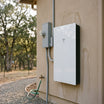
PG&E runs a rebate called the Permanent Battery Storage Rebate. If your home meets the requirements, PG&E puts $7,500 toward a permanently installed home battery.
Not 30 percent of something. Not a credit you hope to claim on a tax return later. A flat $7,500, tied to a battery that is bolted to your house and connected to your panel.
It is also easy to miss, because PG&E has several different battery and generator programs and they all sound roughly the same. This is the big one, and it is the one with a hard deadline attached.

Nobody from PG&E is going to call and tell you that you qualify. That part is on you, and the clock is running.
Eligibility
Who qualifies for the PG&E $7,500 battery rebate?
PG&E publishes the requirements, and they are all-or-nothing. Here is the current list, in plain English.
- You are a residential PG&E electric customer at the address getting the battery
- Your home has had five or more Wildfire Safety outages since January 1, 2024
- You are a first-time permanent battery storage customer with PG&E
- You have not already participated in SGIP, RSI or the Reliability Battery Initiative
- The battery is on PG&E's Qualified Product List
- The system was purchased on or after January 1, 2025
- The battery is permanently installed, not portable
- You receive Permission to Operate from PG&E's interconnection department
- You are enrolled in a Time-of-Use rate plan
- You are enrolled in a PG&E-approved demand response program
Two details that catch people out
Tesla systems have their own wrinkle: PG&E requires Tesla batteries to be enrolled in the Emergency Load Reduction Program A.4 rather than the usual demand response options. And the demand response and rate plan pieces are not optional extras you can sort out later. They are conditions of the rebate, which is why it is worth having someone line all of this up before the equipment is ordered rather than after.

The requirement that decides it
Five wildfire safety outages since January 2024
This is the one that separates the people who qualify from the people who do not, and it is the reason this rebate is so much more relevant here than it is in most of PG&E's territory.
PG&E runs Enhanced Powerline Safety Settings on high fire risk circuits. When those settings are on, the line trips off for things it would normally shrug off, like a branch brushing a conductor. Great for fire prevention. Rough on your refrigerator.
If you live in El Dorado Hills, Cameron Park, Shingle Springs, Placerville, Pollock Pines, Georgetown, Cool, Auburn, Foresthill, Grass Valley or anywhere else on a foothill circuit, there is a real chance your address already has the outage history PG&E is looking for. A lot of homeowners here hit five outages without ever thinking of it as a qualification for anything.
You can look your own address up on PG&E's wildfire safety map under the Backup Power Solutions tab, or we can check it with you on a short call and tell you where you stand.
The part nobody mentions
There is a fixed number of these, and the number keeps going down.
This is not an open-ended program. PG&E funds a set number of rebates and publishes the count as it drops.
Why waiting until December does not work
The rebate is not paid on a signed contract. It is paid after your battery is installed, inspected and granted Permission to Operate by PG&E. Design, permitting, install, inspection and interconnection all sit between today and that application, and every one of those steps runs on somebody else's calendar.
Which means the real deadline is not December 31. It is whenever you need to start so that the paperwork lands before the funding runs out. If your address has the outage history, the smart move is to find out now, while there is still runway.
How it works
From "do I qualify?" to rebate, step by step.
We handle the parts that involve PG&E. You mostly just have to answer the door.
- Step 01Eligibility checkA 15-minute call. We look at your address, your outage history, your rate plan and whether you have used a battery program before.
- Step 02Design and quoteWe size the battery around your evening usage and your backup priorities, using equipment from PG&E's Qualified Product List.
- Step 03Permits and installWe pull the permit, install the system and get it through local inspection. We work with these building departments every week.
- Step 04Interconnection and PTOWe file the interconnection paperwork and get you to Permission to Operate, plus the Time-of-Use and demand response enrollments the rebate requires.
- Step 05Rebate applicationThe application goes in through PG&E's portal with the documentation attached, inside the window PG&E allows.
Want to see the whole picture first? Our savings calculator estimates what a battery and solar setup would do to your PG&E bill, and it asks about your outage history for exactly this reason.
Run the savings calculatorDo not mix these up
The $7,500 rebate is not SGIP, and it is not the free battery program.
PG&E and the state run several battery programs at once. They have different rules, different money, and in some cases they cancel each other out.
Permanent Battery Storage Rebate
$7,500
The program this page is about. Flat amount, permanently installed battery, five or more wildfire safety outages since January 2024, first-time battery customer, Time-of-Use plan and demand response enrollment required.
Applications close December 31, 2026.
Self-Generation Incentive Program
Per kWh
A statewide incentive paid per kilowatt-hour of storage, with much larger amounts available under the equity and equity resilience budgets for qualifying households and locations.
Different eligibility, different application, different money. For some homes SGIP is worth more than $7,500. For others it is worth far less.
Residential Storage Initiative
No cost
PG&E's program that provides a battery at no cost to a narrow group: five or more EPSS outages, an EPSS-impacted circuit, and enrollment in CARE, FERA, Medical Baseline or the self-identified vulnerable program.
Backs up essential circuits only, and supply for the year is limited.
Here is the catch worth knowing before you pick
PG&E's terms say the $7,500 rebate is for first-time battery storage customers who have not already participated in SGIP, the Residential Storage Initiative or the Reliability Battery Initiative. In practice that means these are usually paths you choose between, not a stack you pile up. Choosing the wrong one can quietly cost you thousands. We look at all of them before we price anything, and if another program is clearly worth more for your house, we will say so.
Why it matters who installs it
A rebate this specific is won or lost on paperwork.
The battery is the easy part. Everything around it is where these applications fall apart.
How rebates get missed
- A battery that is not on PG&E's Qualified Product List
- Nobody checked the outage history before the contract was signed
- The homeowner was never enrolled in a qualifying demand response program
- Rate plan left on the wrong schedule
- Permission to Operate delayed past the application window
- A prior SGIP project nobody asked about
How we run it
- Eligibility confirmed before we quote anything
- Equipment selected from the Qualified Product List on purpose
- Rate plan and demand response enrollment handled as part of the job
- Local permitting departments we deal with every week
- Interconnection and PTO tracked, not hoped for
- All three programs compared so you take the biggest one you qualify for
Senga Energy has been installing solar and storage for California homeowners since 2016. We are a licensed C-10 electrical contractor, CSLB #1033247, headquartered on Golden Foothill Parkway in El Dorado Hills, and we install Tesla, Enphase, FranklinWH and SolarEdge storage. More on how we size and spec systems is on our home battery page, and the full list of licensing and credentials is on our credentials page.
You should not need a working knowledge of PG&E program acronyms to get $7,500 you are entitled to. That is our job.

Battery storage installed across El Dorado, Placer, Amador, Nevada and Sacramento counties.
Where we work
Serving PG&E homeowners within about 50 miles of El Dorado Hills.
If you are on a PG&E bill in the Sacramento foothills or Gold Country, this rebate is worth checking.
- El Dorado Hills
- Cameron Park
- Shingle Springs
- Rescue
- Placerville
- Diamond Springs
- El Dorado
- Camino
- Pollock Pines
- Somerset
- Coloma
- Lotus
- Georgetown
- Cool
- Pilot Hill
- Garden Valley
- Auburn
- Meadow Vista
- Foresthill
- Colfax
- Newcastle
- Penryn
- Loomis
- Rocklin
- Granite Bay
- Lincoln
- Grass Valley
- Nevada City
- Penn Valley
- Plymouth
- Sutter Creek
- Jackson
- Ione
- Pine Grove
- Rancho Murieta
- Wilton
One honest caveat. This is a PG&E program, so it only applies to PG&E electric customers. If your power comes from SMUD, which covers most of Sacramento County including Folsom, Rancho Cordova, Citrus Heights and Fair Oaks, or from Roseville Electric, the $7,500 rebate is not available to you. We still work in those areas, and there are other storage options worth a conversation, so call us anyway and we will tell you straight.
Neighbors, not strangers
What homeowners around here say.
"We're thrilled with the monthly savings thus far and I've been happy to find other things to spend the savings on."
"The sales reps were super helpful in answering all of our questions and walking us through the whole process."
"No money down and we couldn't be happier. It looks great and we would definitely use them again."
Straight answers
PG&E battery rebate questions we get every week.
What is the PG&E $7,500 battery rebate?
It is PG&E's Permanent Battery Storage Rebate, a flat $7,500 toward a permanently installed home battery for customers who meet the program requirements. It is separate from the state's Self-Generation Incentive Program and separate from PG&E's small portable generator and battery rebate. You can read PG&E's own summary on the Permanent Battery Storage Rebate page.
Who qualifies for the PG&E battery rebate?
Residential PG&E electric customers whose address has had five or more wildfire safety outages since January 1, 2024, who are first-time permanent battery storage customers with PG&E, who install a battery from PG&E's Qualified Product List purchased on or after January 1, 2025, who receive Permission to Operate, and who are enrolled in a Time-of-Use rate plan and an approved demand response program. Customers who have already participated in SGIP, the Residential Storage Initiative or the Reliability Battery Initiative are excluded.
How do I find out how many outages my address has had?
PG&E's wildfire safety map lets you enter your address and look at the Backup Power Solutions tab. If reading a utility map is not your idea of a good evening, that is fine. Book the 15-minute call and we will check it with you and tell you whether you are over the line.
How many $7,500 rebates are left?
PG&E publishes a running count on its rebate page. As of August 14, 2026 it showed 260 rebates remaining, and they are awarded first come, first served. That number only moves in one direction, so if you think your home qualifies it is worth checking sooner rather than later.
What is the deadline to apply?
Applications must be submitted within 12 months of receiving Permission to Operate, or by December 31, 2026, whichever comes first. Because installation, inspection and interconnection all have to happen before that application, the practical starting deadline is much earlier than the calendar one.
Can I combine the $7,500 rebate with SGIP?
Generally no. PG&E's terms limit the rebate to first-time battery storage customers who have not participated in SGIP, RSI or the Reliability Battery Initiative. For most homeowners these are competing paths rather than a stack, which is exactly why it is worth comparing them before you sign anything. Depending on your household and location, an SGIP equity or equity resilience budget can be worth considerably more than $7,500, or considerably less.
Which batteries qualify for the rebate?
The system has to appear on PG&E's Qualified Product List and be permanently installed, not a portable unit. Tesla systems carry an extra condition: PG&E requires them to be enrolled in the Emergency Load Reduction Program A.4. We install Tesla, Enphase, FranklinWH and SolarEdge storage and we pick from the qualified list on purpose, so the equipment decision and the rebate decision are never in conflict.
Do I need solar panels to get the battery rebate?
PG&E's published requirements are built around the battery itself, your outage history, your rate plan and your demand response enrollment rather than whether you own panels. Plenty of foothill homeowners add storage for backup power first and think about solar later. That said, pairing storage with solar usually changes the economics enough that it is worth running both numbers, which we can do on the same call.
How long does the whole process take?
Design and permitting typically run several weeks, installation is usually a day or two on site, and then inspection and interconnection follow. The variable is always the approvals, not the work. That is the honest answer, and it is the reason we push people to start the eligibility check early instead of waiting for a deadline to focus the mind.
What if I am a SMUD or Roseville Electric customer?
Then this particular rebate is not available to you, because it is funded and administered by PG&E for PG&E customers. Most of Sacramento County, including Folsom, Rancho Cordova, Citrus Heights and Fair Oaks, is SMUD territory. We still install in those areas and there are other storage paths worth discussing, so it is still worth a call.
Do you serve my town?
We are based in El Dorado Hills and work throughout the Sacramento foothills and Gold Country, including Cameron Park, Shingle Springs, Rescue, Placerville, Diamond Springs, Camino, Pollock Pines, Georgetown, Cool, Auburn, Meadow Vista, Foresthill, Colfax, Newcastle, Loomis, Rocklin, Granite Bay, Lincoln, Grass Valley, Nevada City, Plymouth, Sutter Creek, Jackson and Ione. More on our local work is on our El Dorado Hills solar page.
What happens on the 15-minute eligibility call?
We check your address against the outage requirement, confirm whether you have used a prior battery program, look at your rate plan, and tell you whether the $7,500 rebate, SGIP or neither is your best path. If you do not qualify, we will say so on that call and you can get on with your day. No visit required, no obligation, no pitch.
Free 15-minute call
Find out if your address qualifies for the $7,500.
Pick a time below. We will check your outage history, your rate plan and your program history, and tell you straight whether the rebate is available to you. If it is not, we will tell you that too.
What we cover on the call:
- Whether your address meets the five-outage requirement
- Whether you are a first-time battery storage customer with PG&E
- Whether SGIP would be worth more than the $7,500 for your home
- Which qualified batteries fit your backup priorities
- What your rate plan and demand response enrollment would need to look like
- Realistic timing against the December 31, 2026 application deadline
Free. No obligation. No home visit required. About 15 minutes.
Prefer email? Reach us through our contact page and we will come back to you with next steps.
Program details, rebate amounts, funding availability and eligibility requirements are set by PG&E and are subject to change without notice. The remaining rebate count and program deadlines referenced on this page reflect information published by PG&E as of August 2026. Nothing on this page is a guarantee that a specific home, address or project will qualify for the Permanent Battery Storage Rebate, SGIP or any other program. Eligibility is determined by PG&E and the administering agencies, not by Senga Energy. Senga Energy does not provide tax or legal advice.
PG&E is a registered trademark of Pacific Gas and Electric Company. Senga Energy is not affiliated with, sponsored by or endorsed by PG&E, SMUD, the California Public Utilities Commission or any government agency.