




El Dorado Hills Solar Company
Solar near you is different than solar everywhere else.
Before you sign with a national solar company, find out what is actually available to PG&E homeowners here in the Sacramento foothills.
- Battery rebates up to $7,500
- PG&E Solar Billing Plan strategy
- SGIP battery incentives
- EV programs
Free consultation. No obligation. Local El Dorado Hills team.
Rather see a number first? Run our savings calculator and we will work from your figures.
- Licensed C-10 electrical contractor, CSLB #1033247
- Headquartered in El Dorado Hills, CA
- Serving California homeowners since 2016
- Inc. 5000 honoree
- 4.9 from 120+ Google reviews
Here is what most solar quotes do not tell you
Going solar in California has changed. A lot.
Which means the company that gives you the cheapest quote is not necessarily giving you the best deal.
Solar used to be relatively simple. Calculate how much electricity you use. Put enough panels on your roof to produce it. Subtract the federal tax credit. Done.
That is not California solar anymore. Today, when your home uses electricity matters. When your system sends electricity back to PG&E matters. How much battery storage you have matters. Your rate plan matters. Your location matters. Whether you already have solar matters. Even the way your project is structured can matter.
Buried inside all of that are programs worth potentially thousands of dollars to qualifying homeowners.
- When you produceMidday export is not worth what it used to be under PG&E's Solar Billing Plan.
- When you useEvening peak is the expensive electricity. That is the electricity worth offsetting.
- What you storeBattery capacity is now a bigger lever on your savings than panel count.
You have not finished researching solar until you have talked to someone who actually understands PG&E.
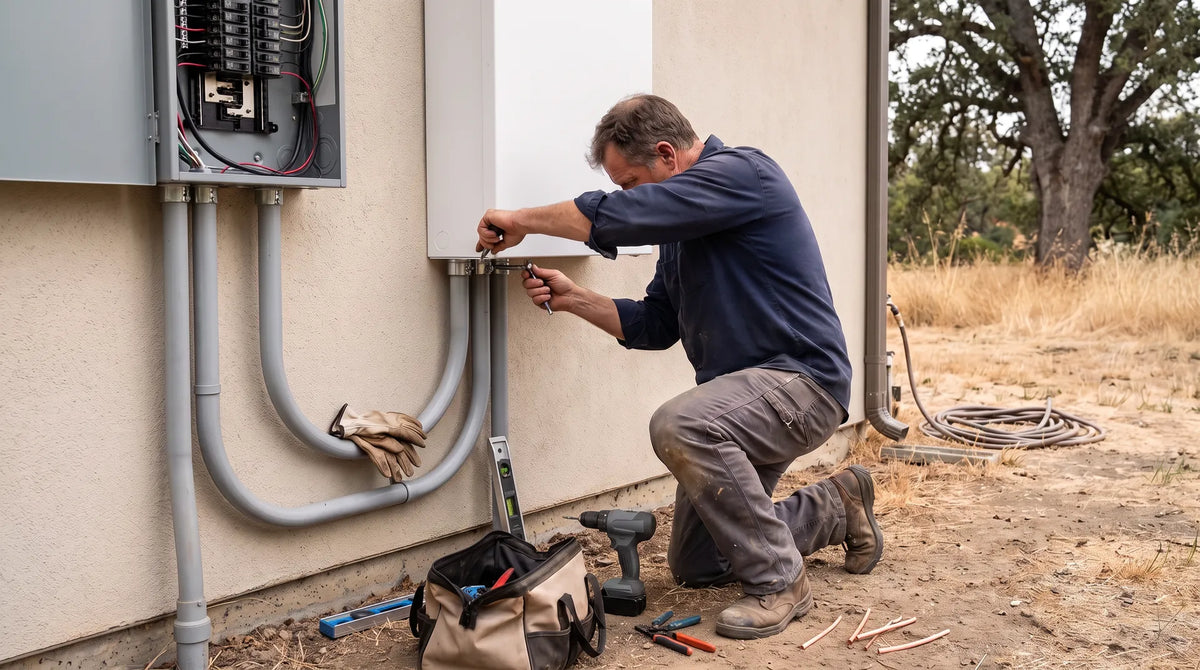
Battery incentives
Wait. PG&E has a $7,500 battery rebate?
Yep. And you would be forgiven for having absolutely no idea it exists.
There are also completely separate battery incentives available through California's Self-Generation Incentive Program. Depending on eligibility, some SGIP programs can cover a substantial portion of battery installation costs. More on how we size and spec storage on our home battery page.
Translation: do not assume the battery price on your first solar quote is the price you actually have to pay. Let us check first.
The fine print, because there always is some
Eligibility depends on factors including your outage history, whether you are a first-time battery customer, the battery installed, your rate plan, and participation in an approved demand-response program. Our savings calculator asks about your outage history and flags likely $7,500 rebate eligibility as part of your estimate.
The 2026 question
"But didn't the 30% solar tax credit end?"
For homeowners purchasing residential solar directly, yes. The old 30% Residential Clean Energy Credit ended for new expenditures after December 31, 2025. Here is where it gets interesting.
That does not mean every federal incentive associated with solar disappeared. Commercial clean-energy tax provisions still exist for qualifying projects and taxpayers, although the rules changed significantly in 2026. That makes the way a project is owned, financed and structured increasingly important.
We are not tax advisors. And we are certainly not going to promise you some magical tax-credit loophole. What we will do is help you understand the different ways solar can be structured today, including ownership and third-party energy options, so you can compare the actual economics. We have written both of those up in plain English: solar loan versus a solar PPA and how a solar PPA actually works.
Because the question in 2026 is not "can I get the old tax credit?"
It is "what is the smartest way to structure solar now that the rules changed?"
That is a much better question. And it is one your solar company should be able to answer.

PG&E's new solar math
This might be the most important part of your entire solar project.
Under PG&E's Solar Billing Plan, electricity does not have the same value every hour of the day. Your savings depend heavily on three things.
01
When you produce electricity
Peak sun and peak value no longer happen at the same time of day. Designing around that gap is most of the work.
02
When you use electricity
Your evening load is the expensive load. Cooking, air conditioning, EV charging, all of it lands in the pricey window.
03
When you send it back
Exports are credited differently now, which changes how much of your own power is worth keeping.
Which changes how we think about designing solar.
Simply throwing enough panels on your roof to hit "100% offset" does not necessarily mean you have created the most economical system.
Instead, we look at your actual energy behavior. Your daytime consumption. Your evening consumption. Your EV charging. Your battery capacity. Your rate plan. Your future electricity needs. And how solar plus storage can work together to reduce the expensive electricity you are buying from PG&E.
Because we are not trying to sell you the most panels. We are trying to design the right energy system.
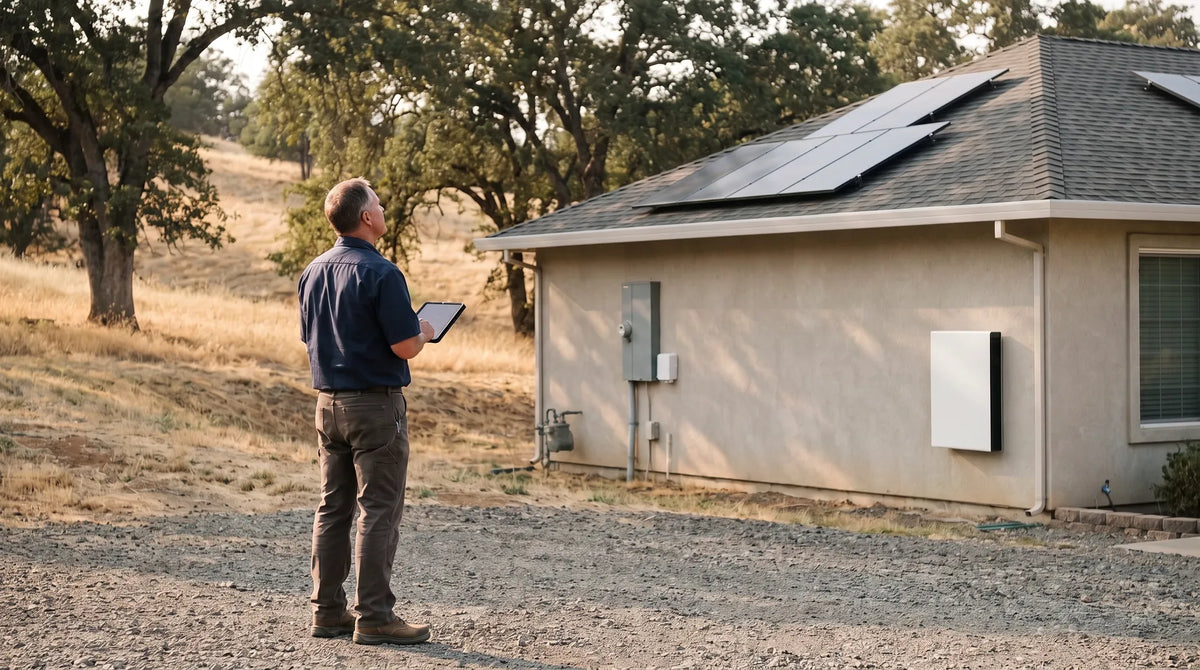
Curious what that actually looks like on your bill? Our savings calculator uses your PG&E bill, your zip code and your outage history to estimate what you would stop paying, including a 25-year comparison.
Run the savings calculator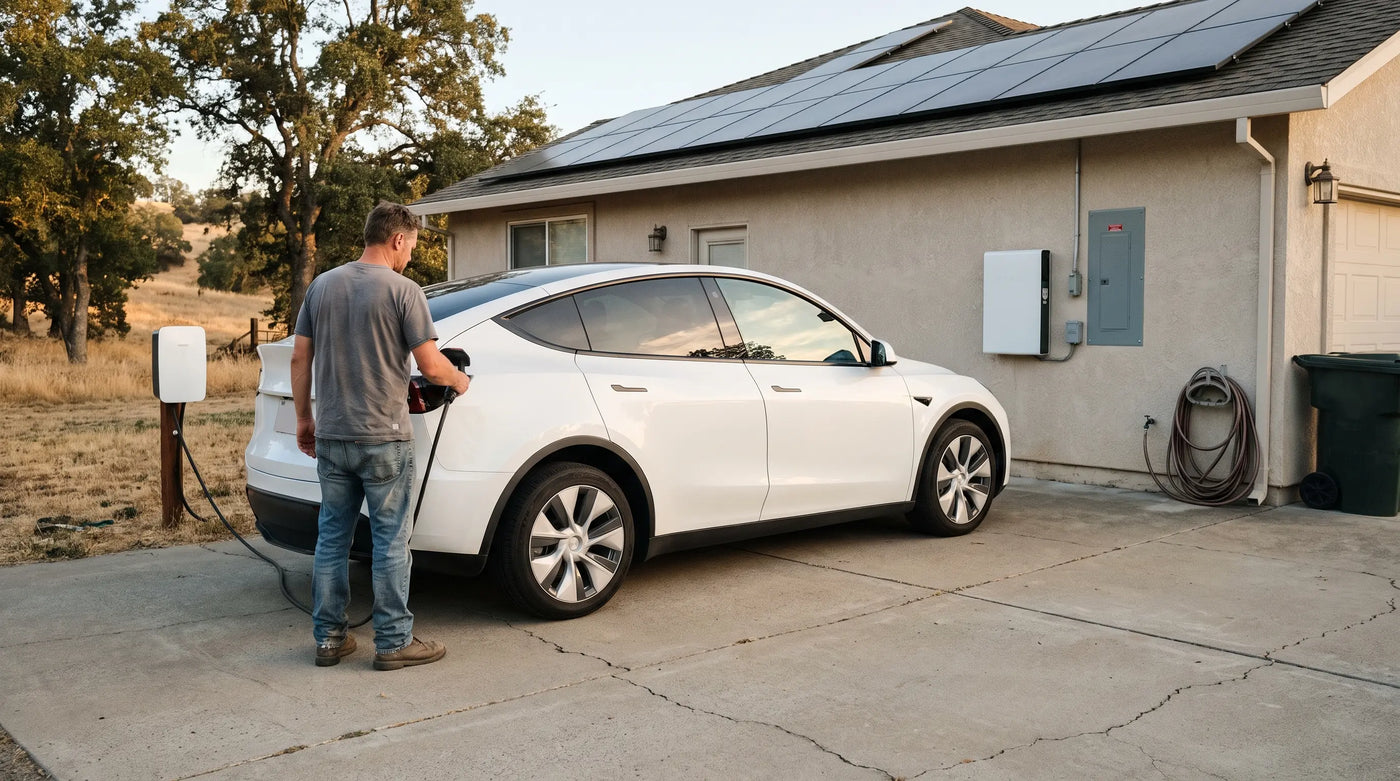
Electric vehicles
Drive an EV? Tell us.
This is another place things get interesting. PG&E currently offers additional programs specifically for EV owners. Depending on eligibility, PG&E customers may qualify for incentives on things like pre-owned electric vehicles and residential EV charging equipment and installation.
An EV can also dramatically change how your solar and battery system should be designed in the first place.
Buying an EV next year? Tell us. Already charging a Tesla every night? Definitely tell us. Thinking about adding a second EV? Yep, tell us that too. The savings calculator asks about home EV charging for exactly this reason.
Because we do not want to design a solar system for the home you had last year. We want to design it around the home you are actually going to be powering for the next 20 plus years.
The advantage of going local
National solar companies are not inherently evil. They just do not have our backyard.
They have shiny websites. Big advertising budgets. Very enthusiastic call centers. And probably a sales rep approximately 13 seconds away from calling you after you fill out a form.
The national quote
- A design template applied to your roof from three states away
- Rate-plan assumptions that may not match your PG&E bill
- Battery sized by package tier, not by your outage history
- Local rebate programs left off the proposal entirely
- A call center that has never seen a foothills fire-zone permit
The Senga approach
- A design built around your actual usage and rate plan
- PG&E Solar Billing Plan strategy, not just a panel count
- Battery sizing checked against rebate and SGIP eligibility
- Local permitting departments we work with every week
- An office ten minutes up the road on Golden Foothill Parkway
Senga Energy is headquartered right here in El Dorado Hills. We work with PG&E homeowners throughout Gold Country and the Sacramento foothills. We deal with the same utility. The same rate structures. The same fire-threat areas. The same permitting departments. The same California incentive programs. And the same bizarre alphabet soup of SGIP, NEM, Solar Billing Plan, TOU, PTO, DR, yada yada yada.
You should not have to become a California energy-policy expert just to put solar on your house. That is our job.

We work in El Dorado Hills, Cameron Park, Shingle Springs, Placerville, Rocklin, Granite Bay, Loomis, Auburn, Lincoln, Grass Valley and the rest of Gold Country.
Recognized nationally, trusted right here at home
Grown enough to make the Inc. 5000. Still headquartered on Golden Foothill Parkway.
Senga Energy has served California homeowners since 2016. We are a licensed California C-10 electrical contractor, CSLB #1033247. The full list is on our credentials page.
Which means when you call us, you are not calling some national solar clearinghouse three states away. You are talking to people who actually work in the communities we serve.

But do not take our word for it
Homeowners in the foothills, in their own words.
"We're thrilled with the monthly savings thus far and I've been happy to find other things to spend the savings on."
"The sales reps were super helpful in answering all of our questions and walking us through the whole process."
"No money down and we couldn't be happier. It looks great and we would definitely use them again."
Already have a solar quote?
Perfect. Seriously. Bring it.
We will give you a free local second opinion. Here is what we look at.
- Whether the system appears appropriately sized
- How the design works with PG&E's Solar Billing Plan
- Whether the proposed battery capacity makes sense
- Potential battery rebates and incentive programs
- Your current PG&E rate structure
- EV charging and future electricity demand
- Whether you are being sold equipment you may not actually need
- Different ownership and energy-purchase structures worth comparing
And if the other company's proposal looks fantastic? We will tell you.
Because here is the deal. We live here too.
Solar done badly does not just hurt the homeowner who bought it. It hurts trust in solar throughout our entire community.
We would rather lose a sale than watch another homeowner in the foothills sign a lousy solar agreement because nobody explained the fine print.
Already have panels and something is not right? That is a different conversation, and we handle it on our solar panel repair page.

Our promise is pretty simple
We help you understand the deal before we ask you to make one.
Maybe Senga is the right installer for you. Maybe we are not. Either way, before you commit tens of thousands of dollars or sign a long-term energy agreement, give us 20 minutes.
- What incentives your home may qualify for
- How PG&E's current solar rules affect your economics
- Whether a battery makes financial sense
- How your EV affects system sizing
- What financing and ownership structures are available
- Whether the solar quote sitting in your inbox actually makes sense
Then you decide what to do. Fair enough?
Straight answers
Questions PG&E homeowners ask us every week.
Is solar worth it in California in 2026?
For most PG&E homeowners with a real electric bill, yes, but the math is different than it was three years ago. Under the Solar Billing Plan, exporting midday power earns far less than it did under older net metering rules, so the savings now come from using and storing your own production instead of selling it. That usually means a smaller panel array paired with the right battery beats a giant array on its own. It also means a quote built on old net metering assumptions can overstate what you will actually save. The fastest way to get a real number for your house is to run your PG&E bill through our savings calculator.
Does the federal solar tax credit still exist in 2026?
The 30% Residential Clean Energy Credit that homeowners claimed on a direct purchase ended for new expenditures after December 31, 2025. Commercial clean-energy provisions still exist for qualifying projects and taxpayers, with rules that changed significantly in 2026, which is why ownership structure matters more now than it used to. We are not tax advisors, so confirm anything tax-related with a qualified tax professional. What we can do is walk you through how each structure changes the numbers, and we compare them side by side in our solar loan versus solar PPA breakdown.
How do I qualify for the $7,500 PG&E battery rebate?
PG&E currently offers a Permanent Battery Storage Rebate for certain qualifying homeowners. Eligibility depends on factors including your outage history, whether you are a first-time battery customer, the battery installed, your rate plan, and participation in an approved demand-response program. California's Self-Generation Incentive Program is a separate track with its own eligibility rules, and depending on which SGIP budget you fall into, it can cover a substantial portion of battery costs. We check both before we price a battery.
Why is my PG&E bill so high even though I have solar?
Usually one of four things. Your system may be undersized for how your household actually uses power, especially if you added an EV or air conditioning since it was installed. Your rate plan may not be the best fit for your production curve. Your true-up may be catching up with a year of small monthly shortfalls. Or your system may simply not be producing what it should, which happens more often than people expect and often goes unnoticed for months. If you suspect that last one, start with solar panel repair and diagnosis.
Do I need a battery, or can I just add panels?
It depends on your evening load and your outage history. In the foothills, where PSPS shutoffs and fire-season outages are a real part of life, storage does two jobs at once: it keeps the lights on, and it lets you use your own cheap daytime power during expensive evening hours instead of exporting it for credits. If your evening usage is light and outages are rare where you are, panels alone may be the better spend. We will tell you which one your house actually is.
Should I buy solar or go with a lease or PPA?
Buying gives you the asset and the long-term upside. Third-party structures like leases and power purchase agreements shift the upfront cost and the equipment risk, and after the residential credit expired they became a bigger part of the conversation for a lot of homeowners. There is no universally correct answer, only the one that fits your tax situation, how long you plan to stay, and what you want to be responsible for. If you are weighing a PPA, two things worth reading first: what a solar PPA actually is and whether a PPA puts a lien on your home.
Does an EV change what solar system I should buy?
More than most people expect. An EV can add the equivalent of a second household's worth of load, and most of that charging happens in the evening when PG&E power is at its most expensive. That changes the right panel count, the right battery size, and often the right rate plan. It also opens the door to PG&E's EV-specific programs, which can include incentives on pre-owned electric vehicles and on residential charging equipment and installation. If an EV is anywhere in your next few years, it belongs in the design conversation now.
What areas do you serve?
We are based in El Dorado Hills and work throughout the Sacramento foothills and Gold Country, including Cameron Park, Shingle Springs, Placerville, Diamond Springs, Rescue, Folsom, Rocklin, Granite Bay, Loomis, Auburn, Lincoln and Grass Valley. If you are on a PG&E bill anywhere in this corner of Northern California, we can help.
Free email series
Not ready to talk yet? Get the short version by email.
Five emails over the next couple of weeks, covering the things that actually move the number on a California solar project. The $7,500 PG&E battery rebate. Why "100% offset" is the wrong goal. What replaced the federal tax credit. And how to tell whether the quote in your inbox is any good. Then we leave you alone.
Before you go solar
Get the local second opinion.
See what solar, battery and energy programs may be available for your home, and find out how we would design your system specifically for PG&E.
Your free solar consultation includes:
- PG&E bill and usage review
- Solar plus battery system analysis
- Local incentive and rebate check
- $7,500 battery rebate eligibility review
- SGIP eligibility review
- Solar Billing Plan strategy
- EV and future energy-use planning
- Review of an existing solar quote, if you have one
- Clear explanation of your ownership and financing options
No obligation. No generic national quote. No pressure to buy. Just a local expert helping you understand your options.
Not ready to talk to anyone yet? Completely fair. Start with the savings calculator, get your estimate as a PDF, and call us when you want a human to look at it.
See what I'd stop paying PG&ESee what my home may qualify for
Tell us the basics and we will come back with next steps, not a sales pitch.
Free consultation. No obligation. A local El Dorado Hills team, not a national call center.
Program availability, rebate amounts, eligibility, savings and financing options vary by customer, property, utility, equipment and program requirements. Savings calculator results are estimates based on the information you provide and are not a quote or a guarantee. Senga Energy does not provide tax or legal advice. Tax-related eligibility should be confirmed with a qualified tax professional.
PG&E is a registered trademark of Pacific Gas and Electric Company. Senga Energy is not affiliated with or endorsed by PG&E, the California Public Utilities Commission, or any government agency.